
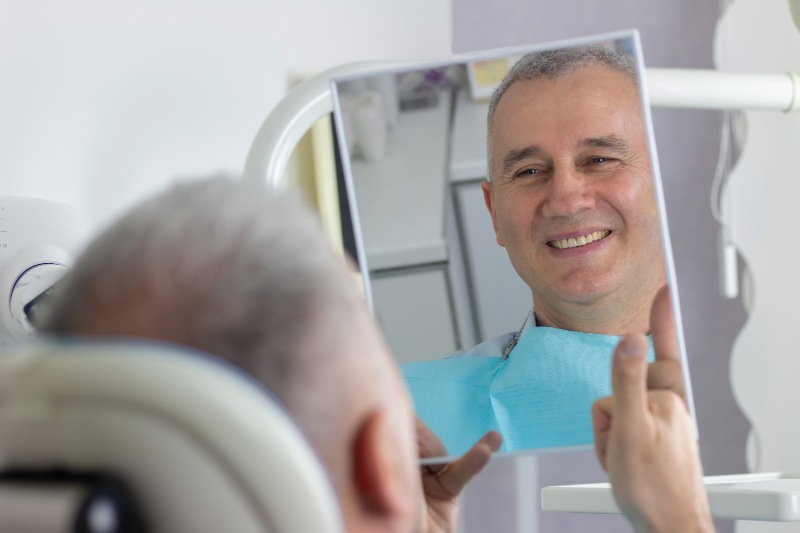
Dental implants in Hatfield may help replace one missing tooth, several teeth, or support a full-arch restoration for suitable patients. Implant care generally begins with an evaluation of the gums, jawbone, bite, medical history, and tooth-replacement goals. Treatment can involve implant placement, a healing period called osseointegration, and attachment of a crown, bridge, or denture. Patients in Hatfield, Lansdale, and Souderton should expect treatment timing and candidacy to vary according to bone support, oral health, healing ability, and the type of final restoration.
Losing a tooth can change more than the way a smile looks. A gap may affect chewing, allow nearby teeth to shift, and change how pressure is shared across the bite. When several teeth are missing, patients may also notice changes in speech, food choices, or comfort during meals.
At Dental Excellence of Hatfield, patients considering dental implants in Hatfield, PA can begin with an evaluation of the missing-tooth area, gums, bone support, bite, and medical history. The practice provides implant options for individual missing teeth as well as larger restorations supported by implants. For patients from Hatfield, Lansdale, and Souderton, understanding the full process before treatment can make it easier to compare implants with bridges, dentures, and other tooth-replacement choices.
How an Implant Replaces the Missing Tooth Root
A dental implant is a small post placed into the jawbone to provide support for a replacement tooth. After healing, the implant may connect to a crown for one missing tooth, a bridge for several teeth, or a larger restoration when extensive tooth loss is present. Unlike a removable appliance that primarily rests on the gums, an implant uses the jawbone for support.
For someone considering dental implants, this means treatment must account for more than the visible gap. Bone volume, gum health, space between neighboring teeth, bite forces, and the planned restoration all matter. The final tooth also needs to be positioned so it can function during chewing and be cleaned effectively over the long term.
Why the Consultation Shapes the Entire Plan
The first implant visit is usually focused on evaluation rather than immediate treatment. A dentist may ask when the tooth was lost, whether there has been previous infection, how chewing has changed, and what the patient hopes to achieve. Medical conditions, medications, tobacco use, previous gum disease, and clenching or grinding may also affect planning.
This is the stage where Dental Implant Treatment begins to take shape. Imaging may be used to assess available bone and surrounding structures, while the clinical exam helps determine whether the gums and remaining teeth are healthy enough to support the proposed plan. Some patients may need additional care before implant placement, while others may be able to proceed without preparatory treatment.
Replacing One Tooth Versus Several Missing Teeth
A single missing tooth may sometimes be replaced with one implant and a crown. This can restore the space without requiring the neighboring teeth to become the main support for a conventional bridge. The dentist still needs to evaluate how much room exists, whether the bone is adequate, and how the crown will meet the opposing teeth.
When several neighboring teeth are absent, treatment can look different. Dental Implant Services may include an implant-supported bridge, meaning every missing tooth does not necessarily require a separate implant fixture. The number and location of implants depend on available bone, the size of the gap, bite forces, and the design of the final restoration.
What Full-Arch Implant Care Means
Patients who have lost most or all teeth in an upper or lower arch may need a broader tooth replacement plan. Implants can sometimes support a full-arch restoration, providing additional stability compared with a conventional removable denture. The number and placement of implants are determined after evaluating the jawbone, bite, remaining teeth, and restorative goals.
This type of Dental Implant Treatment should be planned around the final teeth from the beginning. Implant position affects where the restoration sits, how the bite functions, and how the patient will clean beneath or around it. Full-arch treatment is not appropriate for every patient, and suitability depends on a complete dental and medical evaluation.
Why Bone and Gum Health Matter
Implants depend on healthy supporting tissues. The jawbone needs enough volume and quality to hold the planned implant, while the gums need to remain healthy around the restoration. Tooth loss can lead to gradual bone changes because the area no longer receives the same stimulation from a natural tooth root.
Patients researching Tooth Implants should understand that insufficient bone does not automatically rule out treatment. Depending on the site and individual needs, preparatory procedures such as bone grafting may sometimes be discussed. Gum disease, active infection, or other untreated oral concerns may also need attention before implant placement can move forward.
How Digital Planning Can Support Implant Placement
Implant planning may involve digital X-rays and three-dimensional imaging to help the dentist understand the jawbone and surrounding anatomy. The practice also states that it uses Yomi robotic guidance for implant planning and placement, including single-tooth and full-arch procedures.
Technology supports planning but does not replace clinical judgment. Dental Implant Services still need to begin with the patient’s oral health, anatomy, treatment goals, and the type of restoration being planned. The dentist must decide whether implant care is appropriate and how the surgical and restorative stages should work together for that individual.
How the Final Restoration Completes the Process
The implant fixture itself is only the foundation. The restoration is the visible and functional part used for eating, speaking, and smiling. A single implant may receive a crown, while several implants can support a bridge or larger prosthesis. The shape, bite, and cleaning access of this restoration all need careful consideration.
A second use of Tooth Implants may therefore look very different from one patient to another. A person replacing one premolar has different restorative needs from someone rebuilding an entire arch. Treatment should be designed around the number of missing teeth, the available space, the bite, and the patient’s ability to maintain the restoration.
Everyday Benefits Patients May Notice
For suitable patients, dental implants may provide stable support for replacement teeth and help restore chewing in an area affected by tooth loss. Because implants are anchored in the jaw, they may also help support the surrounding bone and reduce unwanted movement of nearby teeth.
Potential benefits can include replacing a single missing tooth, supporting a multi-tooth bridge, improving stability for a larger restoration, and reducing reliance on removable appliances in selected cases. Results still vary according to healing, oral hygiene, bite forces, gum health, and long-term maintenance, so implants should not be viewed as a treatment that requires no future care.
Local Patient Review
“I wanted to know what would happen between implant placement and getting the final tooth. Having the consultation, healing stage, and restoration explained separately made the process much easier to understand.”
Planning Tooth Replacement with the Future in Mind
Replacing missing teeth means considering more than the space that can be seen in the smile. Bone health, gum condition, bite pressure, remaining teeth, cleaning needs, and the final restoration all influence whether implant care may be a suitable option.
For patients in Hatfield, Lansdale, and Souderton comparing implants with bridges or dentures, understanding each stage can make the decision easier. An individual evaluation with Dental Excellence of Hatfield can help clarify whether implant-supported treatment fits the patient’s oral health, functional needs, and long-term tooth-replacement goals.
Frequently Asked Questions
Can one implant replace one missing tooth?
Yes. A single implant may support a crown when the gums, jawbone, bite, and surrounding structures are suitable after evaluation.
Do I need one implant for every missing tooth?
Not necessarily. Several missing teeth may sometimes be replaced with an implant-supported bridge using fewer implants than missing teeth.
How long does implant treatment take?
Treatment may take several months because placement is followed by healing before the final restoration. Individual timing depends on bone, healing, and treatment complexity.
Can implants be used if all my teeth are missing?
Yes, selected patients may be candidates for a full-arch implant-supported restoration. Bone support, gum health, medical history, and bite must first be evaluated.
What happens if I do not have enough jawbone?
A dentist may discuss bone grafting or another treatment approach depending on the amount and location of available bone.
Are implants suitable for everyone?
No. Gum health, bone support, medical conditions, medications, tobacco use, and healing ability can influence whether implant treatment is appropriate.
How do I clean an implant-supported tooth?
Brush daily and clean around the restoration using the method recommended for its design. Regular professional examinations and cleanings remain important.
Can patients from Lansdale or Souderton receive implant care in Hatfield?
Yes. Patients from nearby communities can seek an implant evaluation in Hatfield, with suitability determined through an individual clinical assessment.