
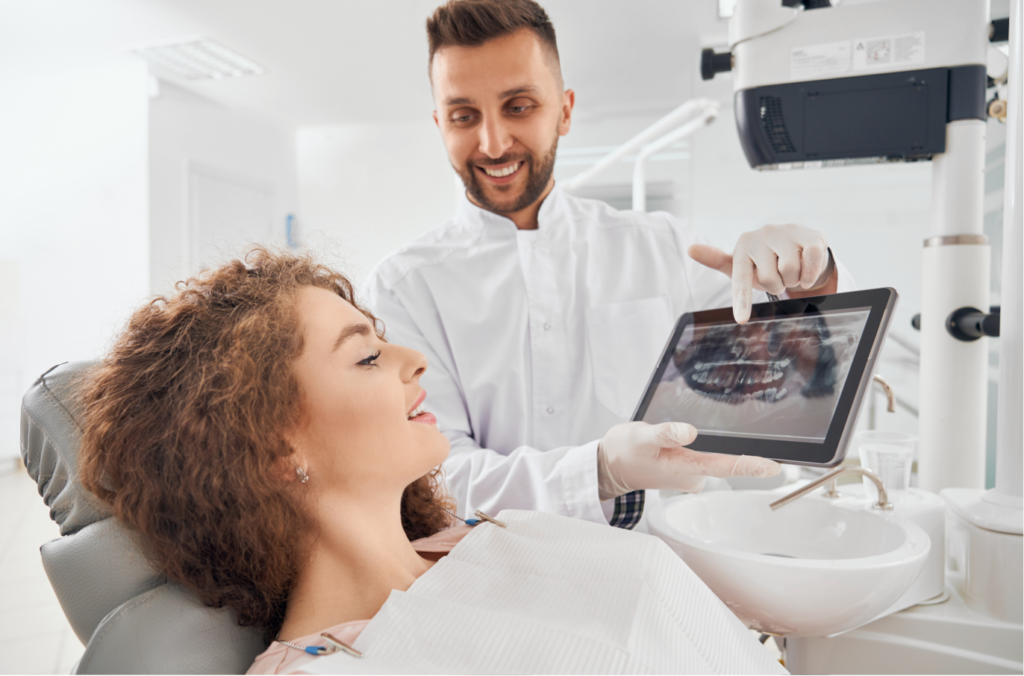
Same-day digital dentistry can shorten the process for restoring a broken tooth by handling the scan, design, milling, and fitting of a crown in a single visit. It replaces the wait for a lab-made crown and the temporary crown worn in between.
Not every broken tooth is a candidate, and the result still depends on how much healthy tooth remains. Understanding how the digital process works makes it easier to know what to ask at the visit and what to expect afterward.
Looking at the Break First
The first step is finding out how far the break reaches. An exam and X-rays show how much healthy tooth is left and whether the nerve or root is involved.
A tooth with enough solid structure can often hold a crown. If the break reaches deeper, other treatment such as a root canal may be needed before any crown is made.
From Digital Scan to Finished Crown
A same-day crown for a broken tooth generally follows these steps, though details vary by system and practice.
- The damaged part of the tooth is removed, and the remaining tooth is shaped to hold a crown.
- A digital scan captures the tooth and its neighbors, replacing putty impressions.
- CAD/CAM software designs the crown on screen using the scan and the way the teeth bite together.
- A milling unit cuts the crown from a ceramic block, which is then polished or glazed.
- The crown is bonded to the tooth, and the bite is checked and adjusted.
Where the Time Is Saved
A traditional crown needs a second visit once the lab finishes it, and a temporary crown covers the tooth in between. A one-visit ceramic crown removes that gap, so the broken tooth is fully covered sooner.
Fewer appointments also mean fewer trips to the office and fewer days with a weakened tooth that could chip further. Because the scan and design happen in the same office, changes can be made while the patient is still in the chair.
Research on Long-Term Results
A 15-year study in Clinical Oral Investigations followed lithium disilicate crowns made with a chairside approach on natural teeth. Of 34 patients, 22 were examined at 15 years, and the survival rate was 80.1 percent.
The study had no comparison group and a small number of patients. The authors also noted that CAD/CAM systems have improved since then, so the figure is a guide and not a promise for any one tooth.
Broken Teeth That May Need Another Approach
Some breaks call for a different plan, which can be explained after an exam.
- Cracks that run below the gumline may not leave enough healthy tooth to hold a crown.
- A break that reaches the nerve may need a root canal before any crown is made.
- A tooth weakened by decay under an old filling needs that decay treated first.
Restoring Broken Teeth in Hatfield
Dental Excellence of Hatfield in Hatfield, PA, lists dental crowns and bridges, dental implants, and emergency care among its services. Dr. Dilip Dudhat is among its dentists, and the practice also lists Yomi, a robotic system used in implant procedures.
Whether a broken tooth can be restored with a digital, one-visit approach is decided after an exam. A consultation shows which crown option fits the tooth, how long the process would take, and what follow-up care would involve.
Choosing a Crown After a Chip or Break
Asking whether a broken tooth suits a one-visit crown is a practical first question after an injury or a chip. The answer depends on the break, the remaining tooth, and the materials available at the practice.
Frequently Asked Questions
Can a same-day crown protect a tooth with a fractured cusp?
Often it can. A crown covers the whole tooth and holds the weakened sections together, which helps protect a fractured cusp. The outcome depends on where the fracture runs and how much healthy tooth remains.
Can a same-day crown be used when a large filling has weakened the tooth?
In many cases, yes. A crown can replace a large filling and wrap around the remaining tooth to strengthen it. The plan depends on how much sound tooth is left around the old filling.
What should a patient expect immediately after the new crown is bonded?
The tooth may feel slightly different at first, and mild temperature or bite sensitivity can occur while it settles. A bite that feels high should be mentioned, since a small adjustment usually resolves it.
When is a same-day crown suitable instead of a lab crown?
It tends to suit a single tooth with enough healthy structure and a straightforward shape and shade. A lab crown may suit cases with complex cosmetic needs or several teeth, and both options can be weighed.