
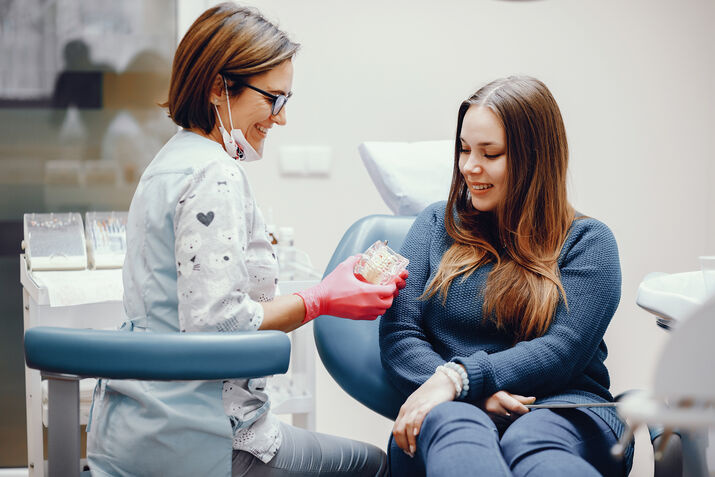
If you’re living with missing teeth, dentures can be a reliable way to restore appearance and function so you can speak, smile, and enjoy meals more comfortably. At Dental Excellence of Hatfield, we help patients choose between full, partial, immediate, and implant-supported options and understand how to care for them day to day. Below, you’ll find a practical guide to types of dentures, home-care tips, what the adjustment period is really like, and when it might be time to reline or replace an existing set!.
Who Might Consider Dentures?
People consider dentures from our dentist in Hatfield, PA, for many reasons, including multiple missing teeth as a result of gum disease, tooth decay, or injury, or as part of a plan after extractions. Some patients prefer dentures if they’re not candidates for dental implants or if they want a removable, non-surgical option. Others choose implant-supported dentures because they value additional stability. Our dentist will review your oral and general health, bone levels, and goals to help recommend an approach that fits your needs and timeline.
Types of Dentures Offered in Hatfield
Full Dentures (Complete Dentures)
- Often considered for: Patients missing all teeth in the upper arch, lower arch, or both.
- How they work: These dentures are removable as they are held in place by suction.
- What to expect: They can cause soreness at first and take some time to get used to.
Partial Dentures
- Often considered for: Patients missing some teeth but with healthy remaining teeth, and the teeth are not strong enough to hold a bridge.
- How they work: This restoration is made up of one or more prosthetic teeth held in place by clasps that fit onto nearby natural teeth.
- What to expect: Partials can restore chewing on both sides and help maintain tooth position. They need to be cleaned every day, just like natural teeth. Otherwise, plaque and tartar can build up on your dentures and cause stains, bad breath, and gum problems.
Immediate Dentures
- Often considered for: Patients having teeth removed and wanting a temporary smile during healing. They are made before the teeth are removed.
- How they work: During your first visit, our dentist will take measurements and create models of your jaws. Once your natural teeth are extracted, these immediate dentures will be inserted right away.
- What to expect: Because your bones and gums will naturally shrink as they heal, your immediate dentures will often require relining by our dentist to ensure they maintain a proper fit.
Implant-Supported (Implant-Retained) Dentures
- Often considered for: Patients seeking added stability with a removable denture that attaches to implants.
- How they work: Implants connect to a surgically fixed foundation attached to the jawbone.
- What to expect: Implant-supported dentures offer reliable support, as opposed to the slippage or bone damage that a fixed bridgework or dentures can bring.
Daily Denture Care (and Why It Matters)
Clean dentures help protect oral tissues and keep breath fresh. Here’s a simple, effective routine:
- Rinse after meals: Remove debris with warm (not hot) water.
- Brush daily: Use a soft brush and a non-abrasive denture cleanser, as regular toothpaste can scratch acrylic and make odor/staining worse.
- Soak overnight: Most dentures should be kept moist in water or a denture-soaking solution; follow product guidelines and your dentist’s instructions.
- Care for your mouth: Gently brush gums, tongue, and any remaining teeth. If you wear a partial, clean around clasps carefully to protect enamel.
- Nighttime removal: Taking dentures out at night lets tissues rest and may reduce the risk of denture stomatitis (inflammation).
If you notice persistent stain, odor, cracking, or calculus buildup, schedule a professional cleaning and fit check.
Ready for a complete smile?
We’d love to help you find a comfortable, natural-looking solution for missing teeth.
Book a consultation or give us a call at (215) 330-2449!
About The Practice: At Dental Excellence of Hatfield, we blend trusted care with personal connection. Our friendly team focuses on comfort, education, and high-quality solutions. Meet the team here.
Real Smiles from Hatfield Locals
“Love this office. Everyone is so kind, wouldn’t go anywhere else. I highly recommend Dental Excellence of Hatfield.” – Bernie G.
Denture FAQs
How long do dentures last before needing replacement?
Most dentures last between 5 to 7 years before needing a replacement. Over time, your mouth and jaw change, affecting fit and comfort. If you’re in Hatfield and your dentures feel loose or uncomfortable, contact us to schedule a fit check or consultation through our First Visit page for new patients. We’d be happy to help adjust or replace them!
Can I sleep with my dentures in?
Technically, yes, but we recommend taking them out at night to give your gums a break and to soak them properly. Sleeping with dentures can contribute to bone resorption over time, so it’s important to give your mouth breaks from denture wear. If you’re heading to bed in your Hatfield home and unsure, just remember that your dentures need rest too! Have questions? Call us at (215) 330-2449!
Are implant-supported dentures better than regular ones?
Implant-supported dentures offer optimal stability and comfort but do require oral surgery. However, like other dentures, implant-supported dentures are removable and can also provide improved function and retention when compared to conventional dentures. If you’re comparing options like “implant vs regular dentures”, schedule a visit with our team in Hatfield at (215) 330-2449!
What should I do if my dentures feel loose or painful?
If your dentures feel loose or cause discomfort, it might be time for a reline or replacement. We’re just down the road from Unionville Pike – swing by for a quick check. Loose dentures don’t need to be your norm, especially when our dentists in Hatfield, PA, can help. Schedule through our Contact page now!
What if my dentures have some damage?
You should inspect your dentures regularly for cracks and bring any damage to our dentist for repair. Poorly fitted dentures can cause sores that may obscure more serious issues, so during your annual exam, our dentist will check your gums for signs of disease or oral cancer and examine any remaining natural teeth for decay or infection. Call now to book a visit at (215) 330-2449!